
Safari guides · Uganda
Bwindi Impenetrable National Park: A Complete Visitor Guide
Everything to know before you visit Bwindi: where the forest is, how to reach it, what lives there, what to do besides gorilla trekking and how to plan the trip.
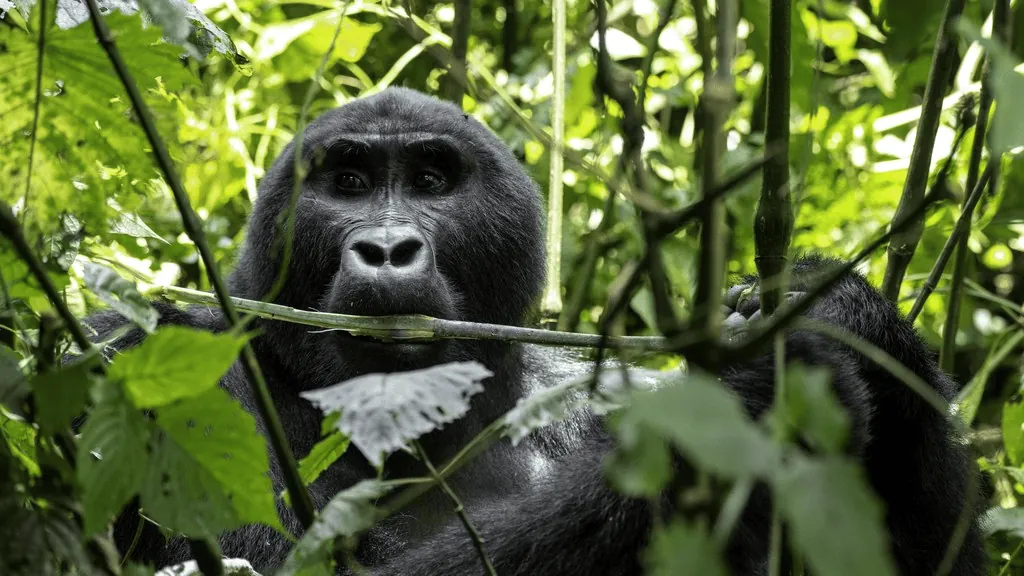
Few places in Africa feel as old as Bwindi. The Bwindi rainforest clings to steep ridges on the edge of the Rift Valley, mist gathers in the valleys before the sun burns it off, and the sounds that reach you on a quiet morning are birds, running water and, if you are lucky, the crunch of a gorilla at breakfast. Most guests come to Bwindi Impenetrable National Park for a gorilla trek, and they are right to, but the park rewards visitors who understand a little more about it.
We are Mwanzo Tours, a tour operator based in Kampala, and this guide is the one we would want a friend to read before booking. It covers where Bwindi is, how to get there, the weather, the wildlife, the walks and cultural visits beyond gorillas, and how to fit the park into a Uganda safari.
Where is Bwindi Impenetrable National Park?
Bwindi Impenetrable National Park lies in south-western Uganda, on the edge of the Albertine Rift Valley and close to the borders with Rwanda and the Democratic Republic of Congo. The Uganda Wildlife Authority (UWA) gives the park's size as 321 square kilometres and its altitude as 1,160 m to 2,607 m above sea level. That 1,447 metre spread in Bwindi's altitude explains why Bwindi holds so many habitats, from lower forest to cool, high-altitude vegetation on the ridges.
The forest was gazetted as a national park in 1991, and UNESCO listed it as a World Heritage Site in 1994. UWA describes it as one of Africa's most ancient forests, dating back over 25,000 years, and as the watershed for five major rivers that flow into Lake Edward. The name "impenetrable" fits what you see: steep ridges, deep valleys and thick, tangled growth with very few straight lines.
If you search for Bwindi National Park, Bwindi Forest or Bwindi Impenetrable Forest, you are looking at the same place. The forest and the national park are one and the same.
What lives in Bwindi? Gorillas and much more
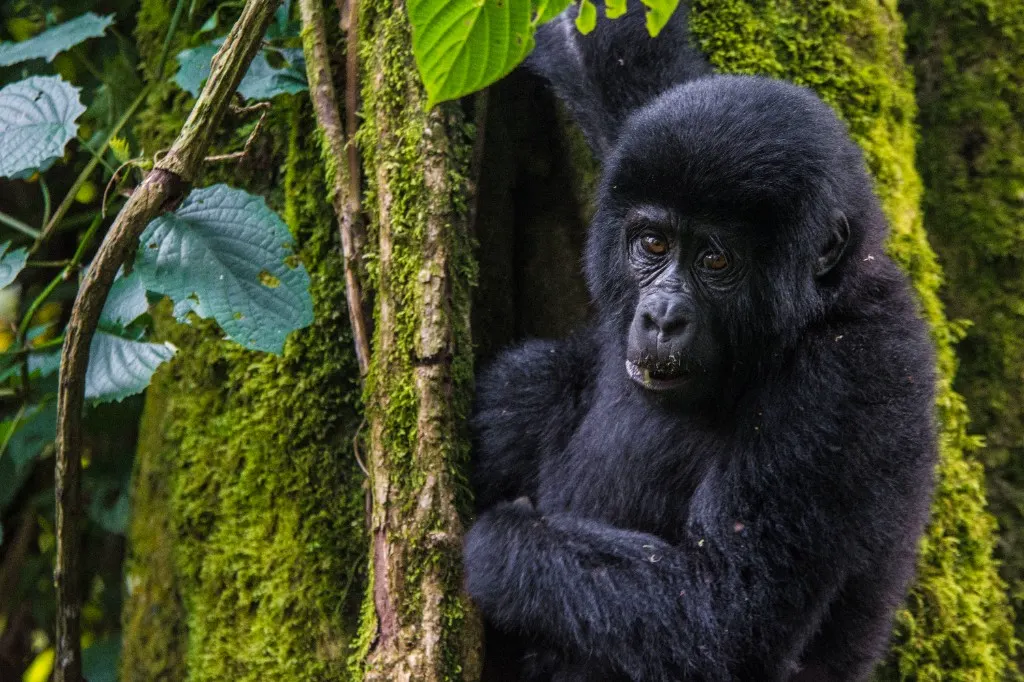
The star is the mountain gorilla. UWA says Bwindi protects approximately 459 mountain gorillas, almost half of the world's remaining population, and, on the same page in 2026, that Bwindi has 25 habituated gorilla groups. The first group habituated for tourism, the Mubare group, was opened to visitors in April 1993. The last full census we can cite is from 2018, which counted 1,063 mountain gorillas worldwide. Our mountain gorillas guide explains the species, the silverback and how Bwindi compares with Mgahinga.
Beyond gorillas, UWA lists about 120 mammal species in Bwindi, including chimpanzees, baboons, elephants and forest antelopes. The park is also a serious bird destination, with more than 350 species and 23 Albertine Rift endemics, including the African green broadbill and Shelley's crimsonwing. UWA also notes over 200 butterfly species, along with reptiles and amphibians. Elephants are present but you should not expect to see them, as the forest is dense and they are hard to find.
The four sectors of Bwindi
Visitors enter Bwindi through four sectors, each with its own trailhead, gorilla families and lodges. Your gorilla permit is tied to one sector and a date, so choosing it is the biggest decision you make. The table is a quick map; our Bwindi sectors guide goes into fitness and drive times.
| Sector | Where | Good to know |
|---|---|---|
| Buhoma | North | The park headquarters and the longest-running trailhead. Easy to combine with Queen Elizabeth National Park. |
| Ruhija | East | Higher and cooler. Known for birding, with a bamboo trail that leads to the 2,607 m Rwamunyoni peak. |
| Rushaga | South | The only sector for the gorilla habituation experience. |
| Nkuringo | South-west | On the southern edge of the forest, with big views and steep walking. |
Where you sleep matters as much as where you trek, because roads between sectors are slow. Our guide to Bwindi gorilla lodges lists lodges by sector.
How to get to Bwindi from Kampala
Bwindi is remote, and the journey is part of the trip. UWA recommends a 4x4 vehicle for every route. These are the main options:
- Kampala, Ntungamo, Rukungiri, Kihihi and Buhoma. UWA describes this as the most direct route for Buhoma: about 390 km on tarmac to Rukungiri, then 82 km on winding dirt road to the park headquarters.
- Kampala, Kabale and the Ruhija or Nkuringo sectors. The tarmac runs about 414 km to Kabale, which UWA puts at around 6 hours. Dirt roads then lead on to Ruhija or Nkuringo, and many travellers sleep in Kisoro before trekking in Rushaga or Nkuringo.
- Via Queen Elizabeth National Park. Bwindi is about 64 km from the Ishasha sector, so many safaris drive south through Ishasha and stay at Queen Elizabeth on the way. When we plan Queen Elizabeth stops, we use Bush Lodge.
- By air. UWA says scheduled and chartered flights from Entebbe to Kisoro or Kihihi take only about 1 hour 10 minutes. You then transfer by 4x4 to your lodge in time for the next morning's trek. Our fly-in versus driving guide compares the two, and our 3-day fly-in gorilla tour is built for short trips.
Whichever way you travel, plan to arrive the day before your trek. Nobody wants to start a gorilla trek after a full day on the road.
Weather and the best time to visit Bwindi
UWA says Bwindi can be visited at any time of year. The forest can be cold, especially in the morning and at night, with an annual average temperature range of 7°C to 20°C and the coldest period in June and July. It also gets up to 2,390 mm of rain a year, so waterproofs are essential in every season.
The drier months are easier underfoot, and the wetter months are quieter, greener and cheaper for permits. UWA's notice TDO 93/04 sets low-season permit rates for April, May and November. Our best time to visit Uganda for gorillas explains the trade-off month by month. What to pack is covered in our gorilla trekking packing list.
Things to do in Bwindi besides gorilla trekking
Gorilla trekking is the main reason to go, but a second day in the park is time well spent. These are the activities in Bwindi Impenetrable National Park that UWA lists, and some can be arranged for the morning or the afternoon. We arrange the birding, community and Batwa experiences for our guests:
- Birding. All four sectors have good birding, and UWA recommends the River Ivi Trail between Buhoma and Nkuringo and Buhoma's Munyanga River Trail. Ruhija's Bamboo Trail and the Mubwindi Swamp Trail are also named by UWA for Albertine Rift specialities.
- Nature walks. The Waterfall Trail near Buhoma passes tree ferns and orchids on the way to three waterfalls. The Muzabajiro Loop climbs a hill for views of the forest, the Rift Valley and the Virunga volcanoes, and the Rushura Hill Trail looks out across the Rift Valley plains.
- Long guided walks. UWA's 2027 tariff notice lists guided walks from Rushaga to Nyabaremura ($80) and from Buhoma to Nkuringo ($100) for foreign non-residents.
- Community and Batwa experiences. The Bakiga farm the terraced hills around the forest, and UWA notes that the Batwa, who traditionally lived in the forest, now live on its edge. Community walks at Buhoma and Nkuringo share their stories and skills.
- Gorilla habituation experience. For travellers who want more than one hour, there is a Rushaga-only habituation experience of up to four hours, at $1,800 per person from 1 January 2027. Our habituation guide explains who it suits.
UWA also says a share of park fees goes to communities around the park, which is one reason we believe visiting Bwindi does good when it is done well. Every Mwanzo booking also supports Serah Foundation.
Gorilla trekking in Bwindi Impenetrable National Park
A standard gorilla trek in Bwindi is the one-hour visit with a habituated family. The key facts, all from UWA, are:
- Permit: $800 per person for foreign non-residents. A chimpanzee permit in Kibale is $300 from 1 January 2027.
- Group size: no more than eight visitors per gorilla family.
- Time with the gorillas: one hour.
- Distance: keep at least 10 metres from the gorillas.
- Minimum age: 15 (UWA July 2024 tracking guidelines and tariff).
- Porters: porters cost about US$10, paid on the day.
For the trek itself, read how difficult gorilla trekking is in Uganda, and see our permit cost guide and how to book your permit for prices and steps. UWA only secures a permit on full payment, which is why we take a 30% deposit from you, buy the permit, and ask for the balance 60 days before departure. Travel insurance is not included in our quotes, so please arrange your own.
Plan your Bwindi trip with Mwanzo
How many days you need depends on your route. A fly-in trip can see gorillas in three days, while a longer drive earns its extra nights with other parks on the way.
- 3 days gorilla trekking in Bwindi is the shortest option by road.
- 3-day Bwindi gorilla trek with Batwa and Lake Bunyonyi adds a cultural visit and a lake.
- 4-day gorillas and chimpanzees combines Bwindi and Kibale.
- 5-day gorillas, Lake Mburo and Lake Bunyonyi breaks the long road west.
You can browse all of our Uganda safari packages and Uganda tours, or read about our Bwindi destination page. Tell us your dates, group size and fitness and we will match the sector, lodge and route.
Frequently asked questions
Where is Bwindi Impenetrable National Park?
Bwindi National Park is in south-western Uganda, on the edge of the Albertine Rift Valley near the Rwanda and Congo borders. The park covers 321 square kilometres.
How high is Bwindi?
Between 1,160 m and 2,607 m above sea level, according to UWA. The altitude range is why the forest is cool and often misty.
Is Bwindi Impenetrable Forest the same as Bwindi National Park?
Yes. Bwindi Impenetrable Forest, Bwindi National Park and Bwindi Impenetrable National Park all describe the same park, a UNESCO World Heritage Site.
How do I get from Kampala to Bwindi?
By road, with a 4x4 vehicle, for roughly a day of driving, or by a flight of about 1 hour 10 minutes from Entebbe to Kisoro or Kihihi followed by a transfer. The best route depends on your sector.
How many gorillas live in Bwindi?
UWA says about 459 mountain gorillas, almost half of the world's population. The most recent published census figures are from 2018.
How much is a gorilla permit in Bwindi?
$800 per person for foreign non-residents. There is a $600 low-season rate in April, May and November, which cannot be rescheduled. A chimpanzee permit in Kibale costs $300 from 1 January 2027.
What else can I do in Bwindi besides gorilla trekking?
Birding, nature walks to waterfalls and viewpoints, long guided walks between sectors, Batwa and Bakiga community experiences and, in Rushaga, the four-hour habituation experience. We arrange the birding, community and Batwa walks as part of your trip.
Do I need a yellow fever certificate to visit Bwindi?
Since 2 October 2026 a yellow fever certificate is not required to enter Uganda. Rules can change, so check our e-visa and health requirements guide before you fly.
Does the price include travel insurance?
No. Travel insurance is not included, so you arrange your own cover.
Book your Bwindi safari
Message us on WhatsApp with your dates and group size, and we will check permits for your preferred sector and send one clear quote.