
Safari guides · Uganda
Mountain Gorillas in Uganda: Bwindi vs Mgahinga Compared
Where to see mountain gorillas in Uganda, how Bwindi and Mgahinga compare, what a gorilla trek really involves and how to behave once you are in the forest.
Gorillas in Uganda are wild families that rangers have spent years getting used to human visitors, and the hour you spend with them is one of the most memorable wildlife encounters in Africa. We are Mwanzo Tours, a tour operator based in Kampala, and this guide covers what you need before you book: where mountain gorillas live, how Bwindi and Mgahinga differ, what silverbacks do, how families should plan, and the rules you follow in the forest.
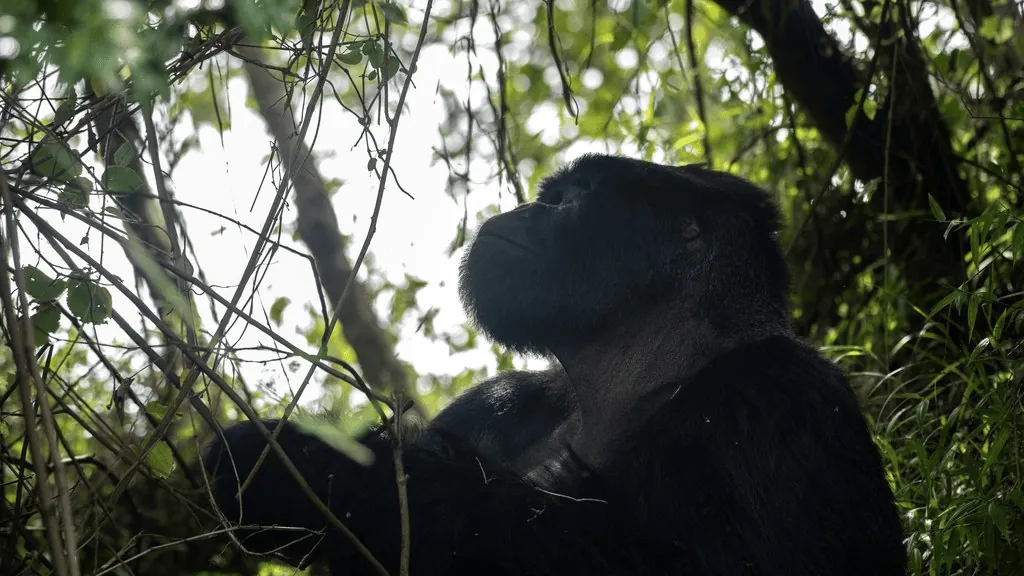
Where to see mountain gorillas in Uganda
Mountain gorillas live in only two areas of the world: the Virunga Massif, which is shared by Uganda, Rwanda and the Democratic Republic of Congo, and Bwindi-Sarambwe, on the Uganda and Congo border. In Uganda you can trek them in two national parks:
- Bwindi Impenetrable National Park in south-western Uganda, a UNESCO World Heritage Site covering 321 square kilometres. The Uganda Wildlife Authority (UWA) says Bwindi protects about 459 mountain gorillas, almost half the world's remaining population.
- Mgahinga Gorilla National Park in the far south-west, near Kisoro, on the slopes of the Virunga volcanoes.
The last published census (2018) counted 1,063 mountain gorillas worldwide, 459 in Bwindi-Sarambwe and 604 in the Virunga Massif. That was the year the IUCN moved the mountain gorilla from Critically Endangered to Endangered, which shows that conservation works but the species is still at risk. A newer census has been carried out and its results had not been published when we wrote this guide.
What is a mountain gorilla, and what is a silverback?
Mountain gorillas are the great apes with thick, dark fur adapted to cold, high-altitude forest. They live in family groups led by an adult male. A male becomes a silverback around the age of 12 to 14, when a saddle of silver hair appears across his back and hips. The silverback leads the group, decides when it feeds and moves, and protects the others. Groups also include females, juveniles and infants, which is why a trek often feels more like visiting a family than watching an animal.
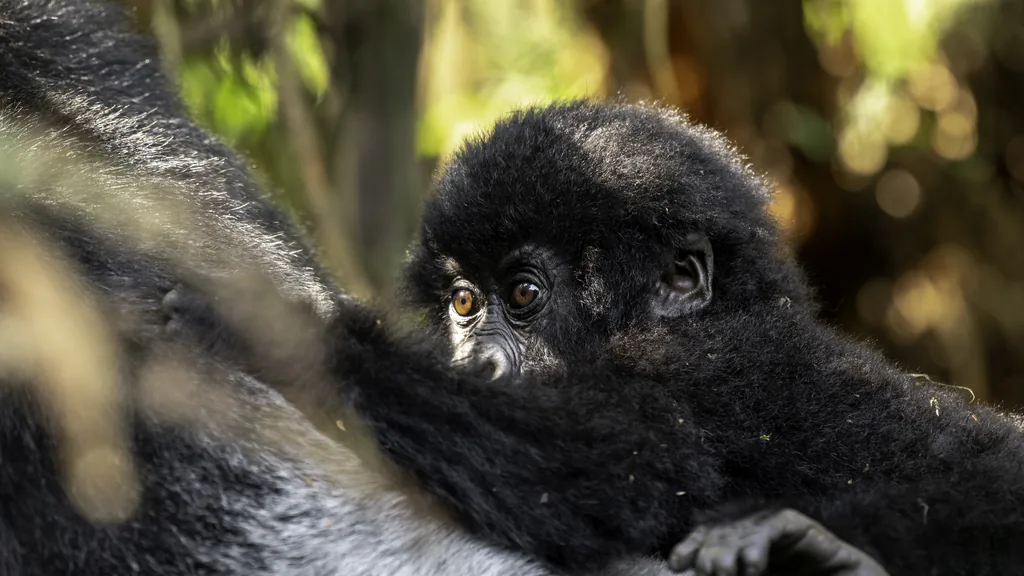
When people search for a silverback gorilla trek in Uganda, they usually mean the standard one-hour trek with a habituated family. If you want longer with a family still being habituated, there is the Rushaga-only habituation experience, which gives up to four hours for $1,800. Our habituation guide has the details.
Bwindi vs Mgahinga: how the two parks compare
| Bwindi Impenetrable National Park | Mgahinga Gorilla National Park | |
|---|---|---|
| Size | 321 sq km | 33.7 sq km, Uganda's smallest national park |
| Altitude | 1,160 m to 2,607 m | 2,227 m to 4,127 m |
| Gorilla families | 25 habituated groups, spread over four sectors (UWA, 2026) | One habituated, transboundary group |
| Landscape | Steep ridges, deep valleys, dense forest | Volcano slopes and high-altitude forest |
| Permit, foreign non-resident | $800 | $800 |
| Other activities | Birding, Batwa and Bakiga cultural visits, forest walks | Batwa trail, golden monkeys, volcano hikes |
| Nearest base | Buhoma, Ruhija, Rushaga, Nkuringo | Kisoro |
Bwindi: more choice, more flexibility
UWA's Bwindi park page (checked October 2026) says Bwindi has 25 habituated gorilla groups, and it is the first choice for most visitors because of that choice of families and its four separate sectors: Buhoma, Ruhija, Rushaga and Nkuringo. More families means more permits per day, which makes it easier to find dates, and you can choose a sector to suit your route or fitness. Our Bwindi sectors guide compares the four, and our guide to Bwindi gorilla lodges shows where to stay. You can read more on our Bwindi destination page.
Mgahinga: small, high and dramatic
Mgahinga Gorilla National Park is much smaller and sits high on three extinct volcanoes of the Virunga range. UWA says it has one habituated transboundary gorilla group. Because the group is transboundary, it can move across the border, so availability can change and we confirm it before we plan your days. The park also offers a Batwa trail with a Batwa guide, golden monkey tracking and volcano hikes, and we arrange all three. UWA's 2024 to 2026 tariff lists golden monkey tracking at $60 and Mgahinga volcano climbing at $100 per person for foreign non-residents, both excluding the $40 park entry fee, and the Batwa trail at $80 including entry. UWA's notice for 2027 does not change these rates, and we confirm the current price in your quote. UWA lists the drive from Kampala to Kisoro, the nearest town, at about nine hours, while scheduled and chartered flights from Entebbe to Kisoro take about 1 hour 10 minutes.
Which should you choose?
Choose Bwindi if you want the widest choice of dates and sectors, a longer stay in the forest and a range of lodges. Choose Mgahinga if you already plan to be around Kisoro, Lake Mutanda or Lake Bunyonyi, or if you like volcano scenery and want to add golden monkeys. Many guests combine them in a southern itinerary. We help you choose when we quote, based on dates, route and fitness.
A gorilla day in Bwindi or Mgahinga: the short version
A gorilla trek starts early with a briefing from the UWA rangers at the trailhead. You are assigned to a group of no more than eight visitors and to a habituated gorilla family. Trackers have often already located the family, and you walk with rangers to find them. The walk can be short or long, depending on where the family spent the night, and you walk in steep, muddy forest. Porters are available to carry your bag and help you on slopes. Porters cost about US$10, paid on the day, and hiring one supports local families.
Once you meet the gorillas, you have one hour with them. Then you return to the trailhead, often tired and muddy but delighted. When you are ready to plan, our guide to gorilla trekking in Uganda covers packages and permits. Our what to pack for gorilla trekking guide covers gloves, gaiters, rain gear and boots.
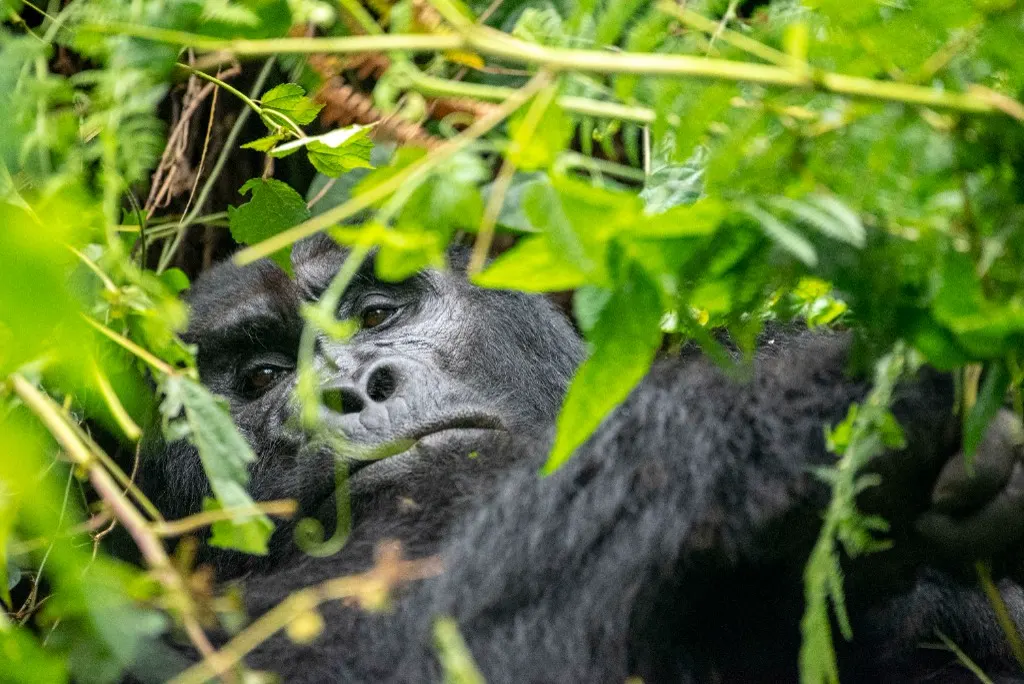
Mountain gorilla permit cost: Bwindi and Mgahinga
- Gorilla trekking permit: $800 per person for foreign non-residents in 2027 (UWA tariff notice TDO 93/04), the same for Bwindi and Mgahinga.
- Low season: $600 per person in April, May and November. Low-season permits cannot be rescheduled. See our low-season gorilla safari.
- Chimpanzee permit in Kibale: $300 per person, a popular add-on.
- Travel insurance: not included in our quotes, so please arrange your own cover.
We take a 30% deposit and the balance is due 60 days before departure. Permits are bought in your name as soon as the deposit clears, and our permit money protection page explains how. For a full breakdown, read gorilla permit cost in Uganda for 2027 and how to book your permit.
Seeing mountain gorillas with children and families
The minimum age to visit the mountain gorillas in Uganda is 15, set in UWA's July 2024 tracking guidelines and its tariff, and it applies in every sector. Teenagers who are fit and used to walking are welcome, but younger children cannot join the trek. For mixed-age families we usually build a safari where the trekkers go to the gorillas while the others enjoy lodge time, cultural visits and boat trips, and then everyone meets for the rest of the trip. Our guide to the gorilla trekking age limit in Uganda explains the options. Tell us ages and fitness levels and we will plan around them.
Mountain gorilla rules and etiquette
The rules protect the gorillas, who can catch human illnesses, and they protect you. Your ranger briefs you in person, and the ranger's instructions come first.
- Keep your distance. UWA's published tariff rules set a minimum distance of 10 metres (about 33 feet). Your ranger tells you what applies on the day, and you never approach.
- Do not trek if you are ill. Anyone with a cold, flu or infectious illness may be refused entry to the group, so tell us and your ranger honestly.
- Cough or sneeze away from the gorillas and cover your mouth.
- No flash photography, and keep your voice low.
- Do not eat, drink or smoke near the gorillas.
- Stay in your group and follow the guides.
- If a gorilla comes close, stay calm, do not run, and follow your ranger's lead.
- One hour only with the gorillas, in a group of no more than eight visitors.
When to go
Gorillas can be trekked all year, but the experience differs. The drier months are easier underfoot, while the wetter months are quieter and the low-season permit is cheaper. Our best time to visit Uganda for gorillas explains the trade-off month by month.
Plan your mountain gorilla trip with Mwanzo
As a Kampala tour operator, we handle permits, lodges, transfers and guides in one quote. Short trips include 3 days gorilla trekking in Bwindi, a Bwindi trek with Batwa and Lake Bunyonyi and a 3-day fly-in gorilla tour. To add game drives, chimpanzees or Murchison Falls, see our Uganda safari packages and Uganda tours.
Frequently asked questions
Where can I see mountain gorillas in Uganda?
In Bwindi Impenetrable National Park and Mgahinga Gorilla National Park, both in south-western Uganda. UWA says Bwindi has 25 habituated gorilla groups across four sectors (2026), and Mgahinga has one habituated group.
How much is a gorilla permit in Uganda?
$800 per person for foreign non-residents, in both Bwindi and Mgahinga. There is a $600 low-season offer in April, May and November. The chimpanzee permit in Kibale is $300.
Is Mgahinga cheaper than Bwindi?
No. The permit is the same $800. The difference is the setting: Mgahinga is smaller and higher, and it has one gorilla group, so availability is tighter.
How long do you spend with the gorillas?
One hour once you find them. The walk to the family can take anything from under an hour to most of the day.
What is a silverback gorilla?
A mature male mountain gorilla, usually 12 to 14 years old or more, named for the silver hair on his back. He leads the family group.
Can children see the mountain gorillas in Uganda?
The minimum age is 15. Younger children cannot trek, but we plan family safaris with other activities for them.
Do I need a yellow fever certificate to enter Uganda?
Under the immigration notice of 2 October 2026, a yellow fever certificate is not required to enter Uganda. Rules change, so check our e-visa and health requirements guide before you fly.
Does the price include travel insurance?
No. Travel insurance is not included, so you arrange your own cover.
Book your mountain gorilla trip in Uganda
Message us on WhatsApp with your dates and group size and we will check permits for Bwindi and Mgahinga and send one clear quote.