

Destination guide · Uganda
Gorilla Trekking in Uganda: Bwindi Impenetrable National Park Guide
Permits, the four Bwindi sectors, what a trek day is really like and what a gorilla safari costs. Written from Kampala by the operator who buys the permits.
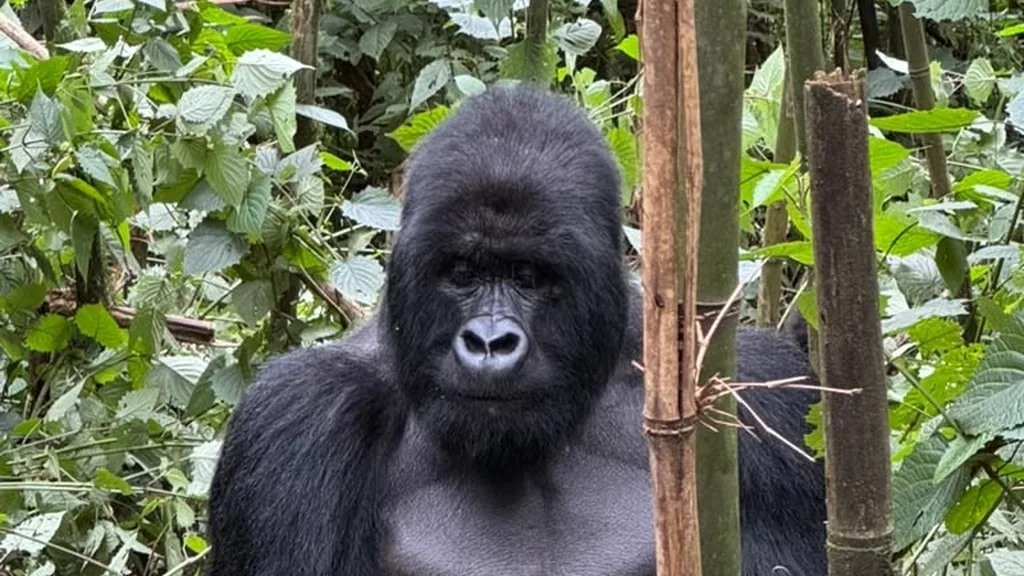
Gorilla trekking in Uganda happens in one small corner of the country, in a forest so steep and tangled that the people who named it called it impenetrable. Bwindi Impenetrable National Park covers 321 square kilometres of south-western Uganda and protects about 459 mountain gorillas, close to half of all the mountain gorillas left in the world. You walk in at dawn with a ranger, follow trackers who went out before first light, and then spend one hour with a habituated family.
That hour is the product. Everything else, the permit, the sector, the lodge, the road or the flight, exists to put you in front of it on the right morning. This guide sets out how the pieces fit, using Uganda Wildlife Authority (UWA) figures rather than brochure language. We are Mwanzo Tours, based on Bukoto Street in Kampala and licensed by the Uganda Tourism Board under UTB/RTT/TT/2023/100873.
Why Uganda for gorillas, and why Bwindi
Only three countries have mountain gorillas: Uganda, Rwanda and the Democratic Republic of Congo. Uganda's advantage is not the gorillas, which are the same animals, but what surrounds them. One trip can put you with chimpanzees in Kibale, on a boat below the Murchison Falls and on a game drive in Queen Elizabeth where lions climb trees in Ishasha.
Bwindi is where almost all of it happens. UWA lists 25 habituated gorilla groups across the park in 2026, spread over four sectors, which is why a permit can usually be found somewhere even when one trailhead is full. The forest was gazetted as a national park in 1991 and listed by UNESCO as a World Heritage Site in 1994. It also protects about 120 mammal species and more than 350 bird species, including 23 Albertine Rift endemics, so the walk is rarely only about the gorillas.
On price, Uganda is $800 standard or $600 in the low season against Rwanda's $1,500 year round. Our Uganda vs Rwanda comparison covers the rest, including drive times and the difference in the forest itself.
Bwindi or Mgahinga: where to trek
Bwindi is the practical choice for most visitors, and not only because it has far more gorilla families. It has four separate trailheads, lodges of every standard around each one, and road access from both Kampala and Queen Elizabeth National Park.
Mgahinga Gorilla National Park is 33.7 square kilometres, rises from 2,227 m to 4,127 m, and has one habituated group, the Nyakagezi family, which moves across the borders with Rwanda and Congo. That habit means the family is not always on the Ugandan side on the day you want to trek. When it is, the walk is high, cool and often steep, with volcano views Bwindi cannot offer. It suits travellers already heading for Kisoro or Lake Bunyonyi, not a trip that depends on one trek. Our Bwindi vs Mgahinga guide compares them properly.
The four Bwindi sectors, and who each one suits
Your permit is tied to a sector and a date. That decides where you sleep, how long you drive the day before and how hard the morning will be. The price is identical in all four, so the choice is about terrain, access and lodge, never about saving money. Our Bwindi sectors guide compares them in more detail.
Buhoma: the northern trailhead
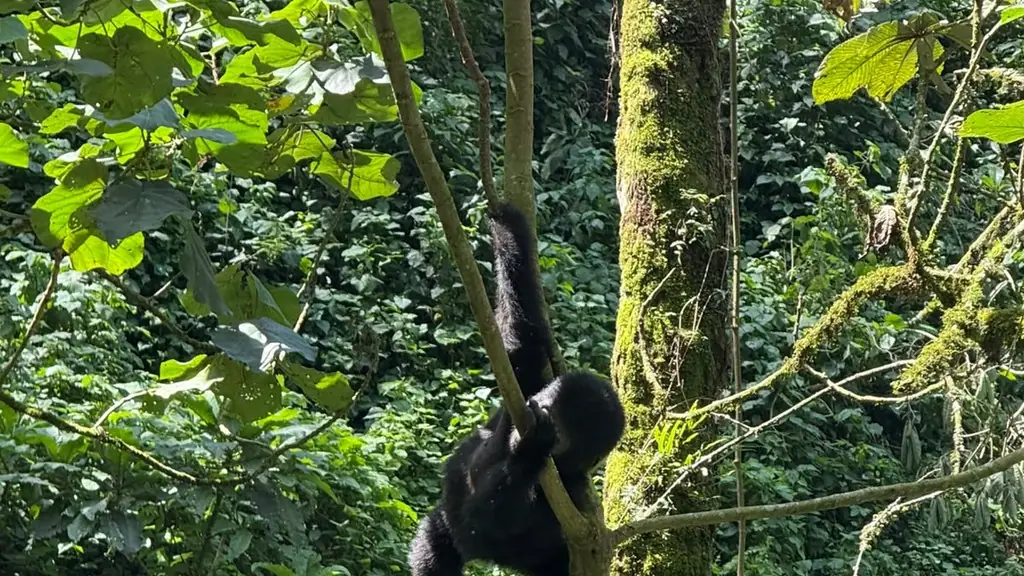
Buhoma is the park headquarters and the oldest trailhead, with gorilla viewing here since 1993. Trails are generally moderate, the lodge cluster is the largest in the park, and the road links make it the natural sector if you are driving from Queen Elizabeth or through Ishasha. UWA describes the route as about 390 km of tarmac to Rukungiri, then 82 km of winding murram to the headquarters. For a first trek, or a group with mixed fitness, this is where we start.
Ruhija: high, cool and quiet
Ruhija sits on the eastern ridges, higher and cooler than Buhoma, and has a reputation among birders for Albertine Rift specialities. The Bamboo Trail climbs towards Rwamunyoni peak at 2,607 m, the highest point in the park. Walks can be longer than from Buhoma and the altitude is felt on the first climb, so it suits travellers who walk regularly. Lodges here are small, which is the appeal and the reason to book early.
Rushaga: the habituation sector
Rushaga, in the south, has the largest number of habituated families and is the only sector where UWA runs the habituation experience. Hikes are commonly longer and steeper than in Buhoma. It works well from Kisoro, Lake Bunyonyi or Mgahinga, or if you are heading on to Rwanda afterwards.
Nkuringo: the ridge with the view
Nkuringo sits on a ridge above the south-western edge of the forest, with long views to the Virunga volcanoes on a clear morning. The approach is the steepest of the four and we recommend a porter here even for fit guests. UWA gives the drive from Kabale as about 105 km and roughly four hours, and from Kisoro about 35 km taking one to one and a half hours. If you fly into Kisoro, Nkuringo and Rushaga are the sectors that make sense.
| Sector | Where it is | Trail character | Best for |
|---|---|---|---|
| Buhoma | North, park headquarters | Generally moderate | First treks, mixed fitness, road access from Queen Elizabeth |
| Ruhija | East, high ridges | Moderate, cooler, sometimes longer | Birders, walkers, quieter trailheads |
| Rushaga | South | Often steep and long | Habituation experience, Kisoro and Rwanda links |
| Nkuringo | South-west, on a ridge | Steepest approach | Views, adventurous trekkers, fewer people |
Gorilla permits: what they cost and how to get one
A permit is the UWA fee that buys one trek, one hour with a habituated family, a ranger guide and a certificate. For a foreign non-resident it is $800, the rate UWA keeps in its tariff notice TDO 93/04 of 26 February 2026. In April, May and November the rate is $600, and those low-season permits cannot be rescheduled.
| Permit | Foreign non-resident | When |
|---|---|---|
| Gorilla trekking, standard | $800 | All year except the low-season months |
| Gorilla trekking, low season | $600 | April, May and November. Cannot be rescheduled |
| Gorilla habituation, Rushaga only | $1,800 | Up to four hours with a semi-habituated family |
| Bwindi park entry, per person per day | $40 | Paid separately from the permit |
Three things surprise people. The permit does not include park entry, which UWA charges at $40 per person per day for Bwindi, nor transport, lodging or the porter. Since 1 March 2026 UWA no longer holds an unpaid reservation, so a permit exists only once it is paid in full. And the rate for your month is confirmed in writing before you pay, because UWA has set no end date for the low-season rate and has published no tariff for standard dates from 1 July to 31 December 2026.
Foreign visitors buy through a licensed operator rather than directly. We take a deposit of the permits in full plus 30% of the rest of the trip, buy the permit in your name once it clears, send the UWA confirmation reference, and ask for the balance 60 days before departure. Cancellation inside 60 days is 100% non-refundable, and travel insurance is not included in our quotes, so please arrange your own cover with medical evacuation and cancellation. Full tariff detail is in our gorilla permit cost guide for 2027, and the process is set out in how to book a gorilla permit.
The gorilla habituation experience
Habituation is the difference between meeting a family that is used to people and spending a morning with one that is still getting there. UWA sells a small number of habituation permits, four visitors per group, in Rushaga only, and the experience runs up to four hours. The permit is $1,800 per person and the minimum age is 15. It suits travellers who have trekked before or want more than sixty minutes, though part of those hours may be spent following a family that keeps its distance. Our gorilla habituation guide explains who it works for.
What a trek day is like, hour by hour
Guests ask two questions before booking: will I actually see a gorilla, and how hard is the walk. The second we can answer precisely. The first nobody can answer honestly, though the trackers' record is strong, because rangers know where each family nested the night before.
06:00 to 07:00 · Breakfast and the drive to the trailhead
You eat early, because the briefing starts at 08:00 and the trailheads are not all next door to the lodges. Sleeping in the right sector keeps this short. Sleeping in the wrong one costs you an hour of sleep and some of the morning's light, which is why we confirm the permit before we choose the lodge.
08:00 · Briefing and allocation
A UWA warden briefs the day's visitors on the rules, then allocates each group of eight to a family. Rangers explain the distance rule, the one hour, the no-flash rule and what to do if a gorilla approaches, which is to stay still and let it pass.
The walk in
A trek from briefing to return commonly takes two hours to most of a day, and the walking itself can be one hour or six. The rangers cut a route towards where the trackers radioed the family, rather than following a marked path. Bwindi has very few straight lines: you climb a ridge, drop into a valley, and push through nettles and bamboo. Rushaga and Nkuringo are steeper, and on a wet morning the clay is slick within minutes of rain.
The hour itself
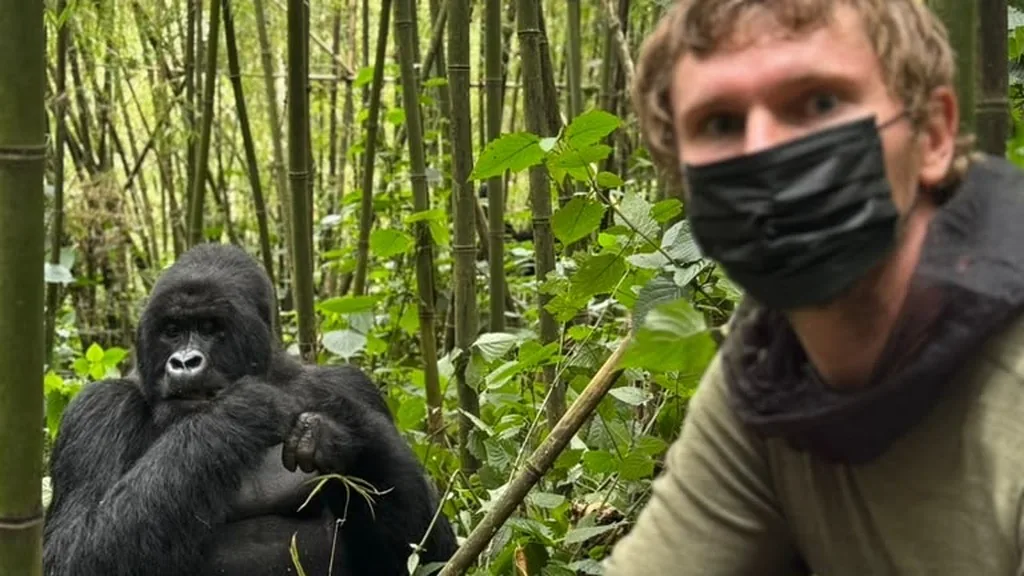
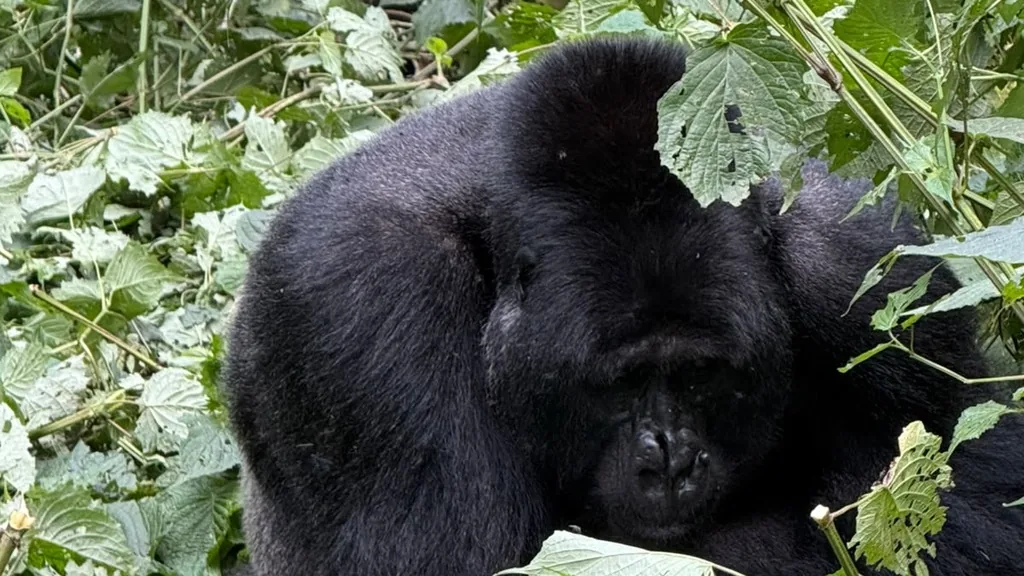
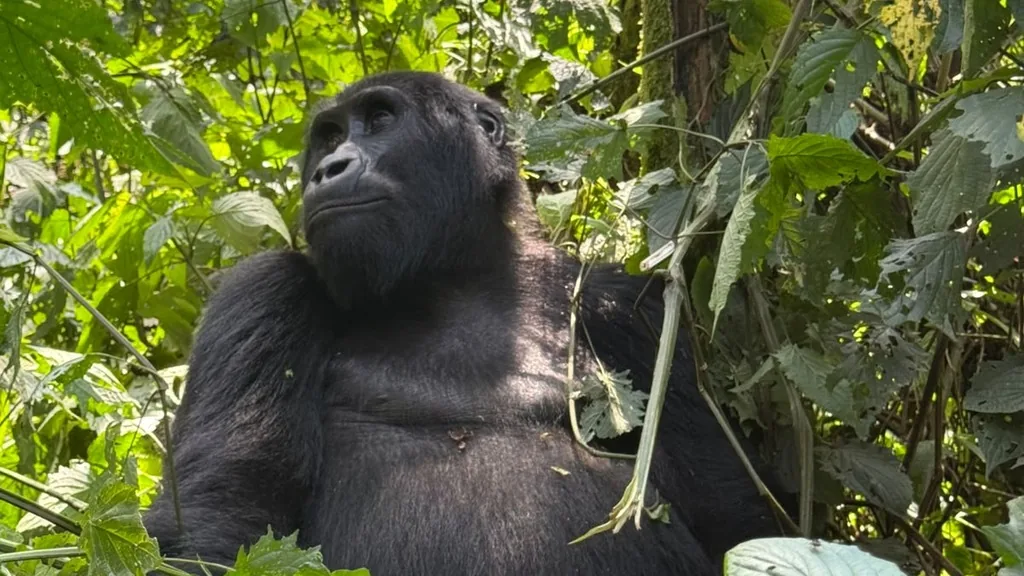
When the family is found, packs come off, voices drop and the clock starts. You get one hour. The family carries on with its morning: a silverback feeding, juveniles wrestling in a tree, an infant clinging to its mother. Rangers keep the group at least 10 metres away and quietly reposition visitors if a gorilla moves towards them. Sixty minutes passes faster than any hour you have spent.
An hour is short, and deliberately so: the limit is a conservation measure for the gorillas' benefit, not a commercial one. Anyone who wants longer books the habituation experience.
The walk out, and the certificate
You walk back to the trailhead, usually a little quieter than on the way in, and UWA issues a certificate with the family name and the date. Porters carry packs and, on the steep sections, often a hand.
Rules on the trek
UWA rangers brief these rules on the morning, and they are the ones we plan around:
- The minimum age is 15 on the day of the trek, with no exceptions.
- A maximum of eight visitors join each gorilla family each day.
- Stay at least 10 metres from the gorillas. If a gorilla approaches, stay still and let it pass.
- You have one hour with the family on a standard trek, or up to four hours on the habituation experience in Rushaga.
- Do not trek with a cold or any infectious illness. Cover your face and turn away if you cough or sneeze.
- No flash photography, and no eating, drinking or smoking during tracking.
- Standard gorilla tracking starts at 08:00. The habituation experience starts at 06:30.
Trekking at an undesignated point, or without a UWA guide and a valid, paid permit, is an arrestable offence. We buy the permit in your name before you travel.
Fitness, age and difficulty
Gorilla trekking in Uganda is moderate to strenuous: not a nature walk, not mountaineering. Three things make it hard. Altitude, since the park runs from 1,160 m to 2,607 m. Terrain that is steep, muddy and pathless in places. And uncertainty, because you walk until the trackers' radio says the family is close.
Buhoma and Ruhija are generally gentler, Rushaga is often longer and steeper, and Nkuringo has the steepest approach. If you have knee trouble, recent surgery or a fear of heights, tell us before we buy the permit, because we can steer the sector and the lodge and build in a porter and a slower pace. Our guide to how difficult gorilla trekking is goes sector by sector.
Older guests and limited mobility
Age is rarely the barrier people expect. The honest limits are the ones a physiotherapist would name: balance, knees, and how you cope with uneven ground at altitude. What helps is Buhoma, porters, a slow pace and accepting that the rangers set it. What nobody can offer is a short walk, because nobody knows where the family will be that morning.
If a guest uses a wheelchair or a walking frame, or has a heart or breathing condition, tell us before we buy the permit. UWA does not publish guidance on assisted trekking at Bwindi, so we confirm the position with the park office for that guest before we promise anything. What we can control is the shape of the day around the trek: the sector, the lodge, and an unhurried start.
The minimum age
UWA sets a minimum age of 15 years on the day of the trek, for the standard trek and for habituation, and it is enforced at the briefing. Families with younger children often pair a parent's trek with a nature walk or a community visit for the children, and our family safari guide sets out how that works.
When to go: month by month
You can trek in Bwindi every day of the year. What changes is how firm the trail is, how many people are on it, and what the permit costs. Uganda sits on the equator, so the year divides into drier and wetter spells rather than seasons.
| Months | Conditions | Permit demand | Book ahead |
|---|---|---|---|
| January to February | Drier, good trekking | High | 3 to 5 months |
| March | Rains returning | Moderate | 6 to 10 weeks |
| April to May | Wettest, lush forest | Lower, low-season permit | 4 to 8 weeks |
| June to August | Drier, most popular | Very high, sells out | 4 to 6 months |
| September to October | Mostly dry, rain building later | Moderate to high | 8 to 12 weeks |
| November | Short rains | Moderate, low-season permit | 6 to 10 weeks |
| December | Drier, holiday peak | Very high | 4 to 6 months |
The lead times are what we see when buying permits for our own guests. They are a guide, and fixed dates are worth checking before you book flights.
Bwindi's weather is uncompromising in any month. UWA gives an annual average range of 7°C to 20°C, June and July coldest, and up to 2,390 mm of rain a year. Mornings at the trailhead can be cold enough for a fleece and a hat, and waterproofs are standard kit rather than a wet-season item. Our trekking packing list covers the rest.
April, May and November are the months UWA discounts, at $600 instead of $800. You get a greener forest, fewer people at the briefing and more choice of lodge, and you pay $200 less per permit. What you accept is mud, more rain and a permit that cannot be moved if your plans change. For photographers and for travellers who dislike crowds, November is a good trade. Our month by month guide goes further.
What to wear and pack
Wrong kit can spoil an $800 permit day. Wear broken-in waterproof hiking boots with ankle support, long trousers and long sleeves against nettles and thorns, gardening gloves for steep sections, and a light rain jacket, because Bwindi can rain in any month. Neutral colours, such as green, brown or khaki, are the usual choice. Carry a day pack with about 2 litres of water, snacks and a camera with the flash turned off.
A porter is optional and strongly recommended for Rushaga and Nkuringo. The porter fee is paid in cash on the day and your guide will confirm the current rate; a walking stick is often provided at headquarters. Shorts are not recommended. Drones are prohibited in Uganda national parks without special UWA permission. The full list is in what to pack for gorilla trekking in Uganda.
Where to stay, by sector
Bwindi is not a park where you pick a lodge and then drive to the trailhead. The trailheads are spread around a steep forest, the roads between sectors are slow, and your permit names one sector. Choose the lodge in that sector, or accept an early start.
The lodges below are examples of what exists in each sector, checked against their own websites. We do not publish rates, because they move with season, room type and sharing, and your quote lists the lodge, the room and the rate separately from the permit. Full detail is in our guide to Bwindi gorilla lodges.
| Sector | Examples named by guests | Suits |
|---|---|---|
| Buhoma | Bwindi Lodge, Mahogany Springs, Ride 4 a Woman, Buhoma Community Rest Camp | First treks, birders, easy road links to Queen Elizabeth |
| Ruhija | Kiho Gorilla Safari Lodge, Gorilla Mist Camp | Views and birding, small lodges that fill early |
| Rushaga | Gorilla Safari Lodge, Rushaga Gorilla Lodge, Ichumbi Gorilla Lodge | Habituation, Kisoro and Rwanda links |
| Nkuringo | Clouds Mountain Gorilla Lodge, Nkuringo Gorilla Lodge | Big views, adventurous trekkers |
Small lodges in Ruhija and Nkuringo fill months out for the dry season. Community camps in Buhoma, including Ride 4 a Woman and Buhoma Community Rest Camp, are the realistic budget options and keep money in the villages around the park. A lodge in the wrong sector is the most common avoidable mistake on a Bwindi booking, because it turns a 06:30 breakfast into a 05:00 departure.
Getting there: Kigali, Entebbe, road or flight
Bwindi is remote, and how you reach it shapes the whole itinerary. There are three realistic approaches, and we plan all of them.
By road from Entebbe or Kampala
UWA publishes the main routes, and they are the only drive times we quote. The most direct to Buhoma runs Kampala, Ntungamo, Rukungiri, Kihihi, Buhoma: about 390 km of tarmac to Rukungiri, then 82 km of winding murram to the headquarters. The alternative is about 414 km of tarmac to Kabale, which UWA puts at around six hours, then murram to Ruhija or Nkuringo. From Kisoro, Nkuringo and Rushaga are each about 35 km, taking one to one and a half hours. UWA recommends a 4x4 on every route and sets a 40 km/h limit in the park, with gates open 07:00 to 19:00. We plan to arrive the day before the trek: nobody should start a gorilla trek after a full day on the road.
By air
Flights from Entebbe to Kisoro or Kihihi take about 1 hour 10 minutes, and a 4x4 meets you at the airstrip. Fares run roughly $350 to $450 per person one way, so a fly-in adds about $250 to $400 per person against driving once the road nights are netted off, and it buys back two days. Our fly-in versus driving comparison sets the two side by side.
From Kigali
Kigali is often the cheaper flight into the region and a sensible start if you are also visiting Rwanda. The drive crosses at Katuna or Cyanika and reaches Nkuringo, Rushaga or Buhoma in a long half day, so the itinerary works best with a night near the border or at Lake Bunyonyi. Our 3-day gorilla trek from Kigali runs this route from $1,574 per person.
Combining Bwindi with the rest of Uganda
Very few guests fly to Uganda for one hour with gorillas and fly home. The usual shape of a first Uganda trip is chimpanzees in Kibale, game drives in Queen Elizabeth, then Bwindi. It works because the road runs west and south in a loop, and because each park is different enough to justify the driving.
Kibale Forest for chimpanzees
A morning chimp trek in Kibale is the natural partner to a Bwindi trek. A chimpanzee permit is $300 per foreign non-resident from 1 January 2027, $250 on a standard 2026 date, or $200 in April, May and November at UWA's low-season rate, which cannot be rescheduled. Kyambura Gorge has chimpanzees too, at $200 from 1 January 2027, with no confirmed low-season rate. UWA sources differ on the minimum age for chimpanzee tracking, so we check with UWA before buying a permit for a child or teenager. Our Kibale chimpanzee guide covers the trek itself.
Queen Elizabeth National Park
Queen Elizabeth is the classic safari half of the trip: the Kazinga Channel boat, the Ishasha sector with its tree-climbing lions, and grassland that balances Bwindi's forest. Bwindi is about 64 km from Ishasha, so many itineraries drive south through the park and sleep at Queen Elizabeth on the way. See our Queen Elizabeth destination guide.
Mgahinga, Lake Bunyonyi and the Batwa experience
Lake Bunyonyi, south of the forest, is a calm stop after the trek, and the Batwa experience near the park shares the story of its first people. UWA lists the Batwa experience at Bwindi at $40, excluding park entrance, and at Mgahinga at $80 including entrance. The 2027 tariff also lists guided walks from Rushaga to Nyabaremura at $80 and Buhoma to Nkuringo at $100 for foreign non-residents, up from $60 each in 2026. Our Bwindi visitor guide covers the walks, birding and community visits in more detail.
What a gorilla trip costs, with real from-prices
The permit is the number people remember, but it is rarely the largest line on a gorilla safari. A 3-day trip from Entebbe mid-range usually lands between $1,500 and $2,500 per person all in, and mid-range safaris in Uganda run $400 to $550 per person per day, all inclusive except international flights and insurance. Our Uganda safari cost guide breaks the budget down.
| Our trip | From, per person | What it adds |
|---|---|---|
| 3-day gorilla trek, Bwindi | $2,162 | The shortest road trip, one trek |
| 3-day Bwindi, Batwa and Lake Bunyonyi | $2,210 | Adds a Batwa visit and the lake |
| 3-day fly-in gorilla tour | $2,250 | Flights to Kihihi or Kisoro instead of the drive |
| 4-day gorillas and chimpanzees | $2,879 | Kibale chimpanzee permit and an extra park |
| 4-day luxury gorilla safari | $3,849 | Higher-grade lodges throughout |
| 5-day wildlife, chimpanzee and gorilla | $3,219 | Savannah game drives before the forest |
| 7-day gorillas, chimpanzees and wildlife | $3,869 | A full western circuit at an easier pace |
| 8-day gorillas, chimps and Big Five | $4,239 | Gorillas, chimpanzees and the savannah parks |
These are indicative from-prices for a private trip, and your written quote confirms the figure for your dates, group size and lodge choice. Outside every quote: international flights, travel insurance, the e-visa at about $50, drinks, tips and the porter fee paid in cash on the day. Inside: the permit, park entry, vehicle and guide, lodges, meals as specified and transfers.
How to choose a gorilla trekking operator
Almost every complaint we hear about a previous trip traces back to one of five things, and all five are checkable before you pay a deposit.
- A licence you can look up. Ugandan operators carry a Uganda Tourism Board licence. Ours is UTB/RTT/TT/2023/100873, and we are happy to be checked.
- A permit bought in your name. Ask for the UWA confirmation reference. If an operator cannot produce one, they are holding a promise rather than a permit.
- Written terms on the deposit. We take the permits in full plus 30% of the rest to confirm, and the balance 60 days before departure, with cancellation inside 60 days 100% non-refundable. That should be in writing, not in a WhatsApp message you have to scroll for.
- Honest sector advice. If nobody asks about your fitness, your knees or how far you can walk uphill, they are selling rather than planning.
- Clarity on what is excluded. Travel insurance is not included in our quotes, and we say so at the start rather than at the invoice.
It also helps to know who you are dealing with. Ours is a Kampala company, not a reseller abroad, and we buy permits directly from UWA for our own guests. You can read more about Mwanzo Tours, see how we protect your permit money, or check whether we are a legitimate operator before you commit.
How to book gorilla trekking in Uganda
Message us on WhatsApp at +256 789 487 378 or email info@mwanzotoursuganda.com with your dates, group size and fitness. We check permit availability by sector, send one written quote, and buy the permit in your name once your deposit clears. The deposit is the permits in full plus 30% of the rest, and the balance is due 60 days before departure. Travel insurance is not included. You can also start from the Plan your journey form.
Frequently asked questions
Where does gorilla trekking in Uganda take place?
Almost all of it happens in Bwindi Impenetrable National Park in south-western Uganda, which has four trekking sectors and 25 habituated gorilla groups (UWA, 2026). Mgahinga Gorilla National Park, on the Virunga volcanoes, has one habituated group that moves across the borders with Rwanda and Congo.
How much is a gorilla permit in Uganda?
$800 per foreign non-resident, the rate in UWA tariff letter TDO 93/04 of 26 February 2026. In April, May and November the rate is $600, and those low-season permits cannot be rescheduled. Park entry is separate, at $40 per person per day for Bwindi.
How long do you spend with the gorillas?
One hour with a habituated family on a standard permit, at a minimum distance of 10 metres, with a maximum of eight visitors per family per day. The gorilla habituation experience in Rushaga runs up to four hours with a semi-habituated family, for $1,800.
How fit do I need to be for gorilla trekking?
Moderate to strenuous, depending on the sector. Buhoma is generally the gentlest, Rushaga and Nkuringo the steepest. The walk can take one hour or six at altitudes from 1,160 m to 2,607 m. A porter helps, and we plan around knee or balance problems if you tell us before we buy the permit.
What is the minimum age for gorilla trekking?
15 years on the day of the trek, enforced at the briefing, for both the standard trek and habituation. There are no exceptions.
Which Bwindi sector should I choose?
Buhoma for a first trek or mixed fitness, Ruhija for birding and quiet trails, Rushaga for habituation and access from Kisoro or Rwanda, Nkuringo for views and a steep climb. The permit price is the same in all four.
When is the best time to trek gorillas in Uganda?
June to September and December to February have firmer trails and more demand. April, May and November are wetter, quieter and cheaper, with $600 permits. Trekking runs every day of the year, and it can rain in any month.
Can I trek gorillas if I only have three days?
Yes. A 3-day trek by road from Entebbe is the shortest option, and a 3-day fly-in trip saves the drive by using flights to Kihihi or Kisoro, which take about 1 hour 10 minutes. Our 3-day Bwindi trek starts from $2,162 per person.
Do I need a yellow fever certificate?
No. A yellow fever certificate is not required to enter Uganda, following the immigration notice of 2 October 2026. Rules can change, and another country on your route may still ask, so check before you fly.
How do I book gorilla trekking in Uganda with Mwanzo?
Message us on WhatsApp +256 789 487 378 or email info@mwanzotoursuganda.com with your dates, group size and fitness. We check permit availability by sector, send one written quote, and buy the permit in your name once your deposit clears. The deposit is the permits in full plus 30% of the rest, and the balance is due 60 days before departure.