
Safari guides · Uganda
Is Uganda Safe to Visit? Ebola, Parks and Kampala in 2026
What official sources say about travelling to Uganda, the Ebola situation and gorilla trekking safety, with links and the date we checked each one.
Official advice on Uganda is not the same in every country, so read your own government's advice yourself. On 18 October 2026 the UK Foreign Office did not advise against travel to Uganda as a whole, but it warned of terrorism, road danger and health risks. The US State Department still showed Level 4, Do not travel, issued on 4 June 2026 during the Ebola outbreak, when we checked on 21 October 2026. Uganda's own Ministry of Health declared its 2026 Ebola outbreak over on 28 July 2026, and the World Health Organization confirmed this on 27 August 2026, while the outbreak in neighbouring DR Congo continues.
What government travel advice says (retrieved 18 October 2026)
| Source | What it said when we read it |
|---|---|
| UK FCDO travel advice | Still current at 18 October 2026, last updated 8 October 2026. No advice against travel to Uganda as a whole in the text we read. It says no travel can be guaranteed safe, that terrorists are very likely to try to carry out attacks in Uganda, and that the road accident rate is high. It advises against all travel to the DR Congo provinces that border Uganda. |
| US State Department travel advisory | Level 4, Do not travel, date issued 4 June 2026, citing crime, health, terrorism and unrest. The page still showed this level when we read it on 21 October 2026. |
| US CDC travel health notices | Level 2, Practice Enhanced Precautions, for Uganda (notice updated 28 August 2026; the CDC notices page was last reviewed 16 October 2026). Level 4, Avoid All Travel, for the Ituri and Nord-Kivu provinces of DR Congo. |
Your own government may have given different advice. Check it, and check what your travel insurance says about travelling to a country your government advises against.
Ebola in Uganda: what is known
- The 2026 outbreak in Uganda is over. It was declared on 15 May 2026 after imported cases from DR Congo. Uganda's Ministry of Health reports 20 confirmed cases, 18 recoveries and 2 deaths, and declared the outbreak over on 28 July 2026. WHO and Africa CDC announced the end of the outbreak on 27 August 2026 after 42 days without a new confirmed case.
- Imported case reported in Nigeria, 20 October 2026. Nigerian health authorities confirmed an imported Ebola case in a traveller who had arrived from Uganda. Uganda says it has no active cases. Investigations were ongoing when we checked, so read the WHO Uganda page and your own government's advice for the latest position before you fly. Daily Monitor report, 20 October 2026.
- The virus was Bundibugyo ebolavirus. The Ministry of Health says there is currently no licensed vaccine or targeted treatment for this strain, which is why early detection and isolation matter.
- The outbreak in DR Congo continues. WHO's situation report with data to 4 October 2026 counted 8,603 confirmed cases and 4,148 deaths in DR Congo since the start, and reported that the outbreak had extended to Kenya. Uganda says it remains on high alert at border points.
- Border precautions. The UK FCDO says the Government of Uganda is continuing to implement precautions on the border with DR Congo. Earlier in the outbreak Uganda closed DR Congo border crossings with limited exceptions. Check the current position before you travel.
- Travel restrictions. WHO advises against travel and trade restrictions related to Ebola and does not recommend closing borders or denying entry. Some countries still apply extra health screening to travellers from Uganda, so check the rules for your home country and any country you transit.
We follow the Ministry of Health and Uganda Wildlife Authority (UWA) announcements. If official guidance changes before your trip, we will tell you, and our booking terms explain what happens if we have to alter an itinerary for safety.
Is gorilla trekking safe?
Gorilla trekking is run by UWA rangers inside the national parks. These are the rules and facts we can source:
- The UWA tariff rules say you must not visit the gorillas if you have a cold or other infectious illness, because gorillas can catch human illnesses. If you must cough or sneeze, cover your face and turn away.
- The minimum age for gorilla trekking is 15 years, and a maximum of eight visitors may visit one gorilla group per day, for one hour. Our age limit guide explains this.
- The UWA tariff also sets a minimum distance from the gorillas, no flash photography, and no smoking, eating or drinking during the visit. Your rangers brief you before you set out.
- The UK FCDO says it is routine practice for security personnel to accompany tourists on gorilla-tracking visits in Bwindi and Mgahinga, in the extreme south-west near the DR Congo and Rwanda borders. It advises using reputable, registered tour operators and contacting UWA for up-to-date advice, and it advises against any gorilla tour that crosses into DR Congo.
- Fitness matters. Trails are steep and can be muddy, and parts of Uganda are at altitude. See how difficult gorilla trekking is and consider a porter.
Kampala, the national parks and travelling with a private guide
- Kampala. Most visitors spend a night or two in Kampala or Entebbe. Official advice warns of petty theft, bag snatching and theft from vehicles, and advises care at night. Use a pre-arranged driver rather than motorbike taxis, keep phones and valuables out of sight, and avoid crowds and demonstrations.
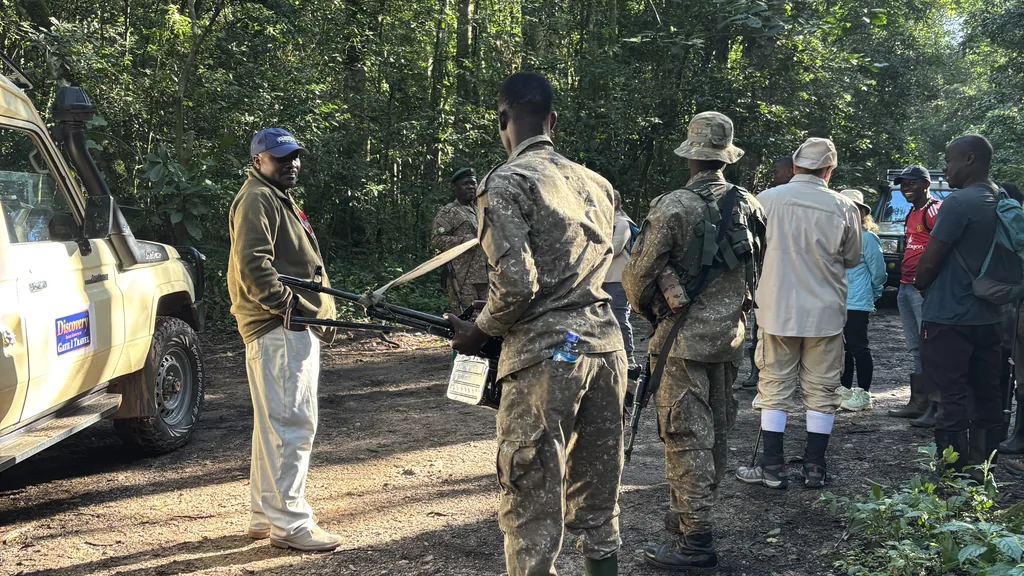
- The national parks. Gorilla and chimpanzee treks are led by armed UWA rangers, and the UK FCDO says security personnel routinely accompany gorilla visits in Bwindi and Mgahinga. Western parks near the DR Congo border, including Queen Elizabeth, carry extra official warnings after the October 2023 attack, so we plan routes and timings with that in mind and follow UWA and local authority advice.
- Private guide and vehicle. On a Mwanzo safari you travel with your own Ugandan driver-guide in a private vehicle, plan drives to finish before dark, and have one person who knows the roads, lodges and rangers. No operator can promise a risk-free trip, but local planning removes many of the risks official sources describe.
Other risks official sources mention
- Roads. Both the UK and US governments call road travel hazardous, with a high accident rate. They advise avoiding driving outside towns after dark. Rural roads can be poor.
- Terrorism. The UK FCDO lists national parks among places that could be targeted, and notes attacks in western Uganda near the DR Congo border, including in Queen Elizabeth National Park in October 2023, where two tourists and their driver were killed. It advises extra caution in these areas and following local authorities.
- Crime. Petty theft, theft from vehicles and mugging, including by motorbike taxi riders, are reported. Both governments advise against showing signs of wealth, and advise caution when walking or driving at night.
- Protests. Elections took place on 15 January 2026. Both governments advise avoiding demonstrations, which can happen without warning.
- Healthcare. Medical facilities are limited outside Kampala, and both governments advise insurance that covers medical evacuation.
- National cleaning day. On the last Saturday of each month from 7 to 10 am, movement is restricted nationwide. The FCDO says tourists and international travellers are exempt, but you may be asked to explain your circumstances.
Health and entry rules
No yellow fever certificate is needed to enter Uganda since the Uganda immigration notice of 2 October 2026, and the UK FCDO removed the requirement from its advice on 8 October 2026. See our e-visa and health requirements guide. For malaria and vaccines, speak to a travel clinic well before you travel. Travel insurance is not included; guests arrange their own.
How booking with Mwanzo works
We take a 30% deposit and the balance is due 60 days before departure. Within 60 days of departure: deposit and balance are non-refundable (100%). Read the full terms on our payment page and terms page, and see how to check that Mwanzo is a licensed operator.
Sources
The sources below were read on 18 October 2026, and the US advisory was rechecked on 21 October 2026. Links open the official pages, which may have changed since.
- UK FCDO, Uganda travel advice (including the safety and security, regional risks and health pages), updated 8 October 2026.
- US Department of State, Uganda travel advisory, issued 4 June 2026.
- US CDC, travel health notices, page last reviewed 16 October 2026.
- Uganda Ministry of Health, Uganda is officially Ebola free, 28 July 2026, and the Uganda Media Centre statement of the same date.
- WHO Regional Office for Africa, Uganda ends Ebola outbreak, 27 August 2026.
- WHO Regional Office for Africa, weekly external situation report 21, data as of 4 October 2026.
- Uganda Wildlife Authority conservation tariff and gorilla tracking rules, the July 2024 to June 2026 edition, which is the latest rules text we could retrieve.
- Daily Monitor, Nigeria confirms Ebola case in patient who arrived from Uganda, 20 October 2026.
- Uganda immigration notice on the yellow fever certificate, 2 October 2026.
Questions about a specific trip? Message us on WhatsApp at +256 789 487 378, email info@mwanzotoursuganda.com, or use the Plan your journey form. We reply within one business day. Planning from abroad? See our guides for travellers from the USA, UK, Germany and Netherlands, or a first trip such as the 3-day Bwindi gorilla trekking package.
Frequently asked questions
Is Uganda safe for tourists?
Official advice differs by country and changes over time. On 18 October 2026 the UK FCDO did not advise against travel to Uganda as a whole but warned of terrorism, road danger and health risks, while the US State Department showed Level 4, Do not travel, and still did on 21 October 2026. Read your own government's advice before you book.
Is there Ebola in Uganda now?
Uganda's Ministry of Health declared the 2026 Bundibugyo Ebola outbreak over on 28 July 2026, and WHO and Africa CDC confirmed this on 27 August 2026. The outbreak in neighbouring DR Congo continues, and Uganda says it remains on high alert. Check the Ministry of Health, WHO and your government's travel advice before you fly.
Is Kampala safe for tourists?
Most visits to Kampala pass without trouble, but official advice warns of petty theft, bag snatching and theft from vehicles. Use a pre-arranged driver, avoid motorbike taxis and demonstrations, and take care at night.
What about the Ebola case reported in Nigeria in October 2026?
On 20 October 2026 Nigeria confirmed an imported Ebola case in a traveller who had arrived from Uganda. Uganda says it has no active cases, and WHO declared Uganda's outbreak over on 27 August 2026. Check WHO and your own government's advice for the latest position before you fly.
Is gorilla trekking safe?
Treks are led by UWA rangers, with a one-hour visit and a maximum of eight visitors per gorilla group per day. You must not trek if you have a cold or other infectious illness. The UK FCDO says security personnel routinely accompany tourists on gorilla visits in the south-west.
Can I still travel if my government says Do not travel?
That is your decision, and we cannot advise on it. Check what your travel insurance covers when your government advises against travel, and read the advice in full.
Do I need a yellow fever certificate to enter Uganda?
No. Since the Uganda immigration notice of 2 October 2026, a yellow fever certificate is no longer needed to enter Uganda. Check again before you fly, because other countries on your route may ask for one.
Is travel insurance included?
Travel insurance is not included; guests arrange their own. Both the UK and US governments advise a policy that covers medical evacuation.