
Safari guides · Uganda
Things to Do in Uganda: The Safari Experiences Worth Your Days (and the Ones That Aren't)
A Kampala tour operator's honest ranking of the best things to do in Uganda: the safari experiences that earn their place, and the ones that only work if you have the days.
How to choose things to do in Uganda by the days you have
Most “top 10 tourist attractions in Uganda” lists treat the country as a buffet. It is not. Uganda is compact on a map and slow on the road: Entebbe to Bwindi is about 8 to 11 hours by 4x4, which is why a short gorilla trip is a gorilla trip, and why a week usually stays in the south-west. See fly-in versus driving.
Use the days you have, not a bucket list. Three or four days is a focused add-on: gorillas from Entebbe or Kigali, or one short savanna park. Seven or eight days is the classic first visit — gorillas, chimpanzees and Queen Elizabeth — see our 7-day itinerary example. Ten days or more is when Murchison Falls and Ziwa start to make sense; fourteen days allows a slower pace, or Kidepo or the mountains.
Packages that match those lengths are on our safari packages and Uganda tours pages. For the wider picture, start with the Uganda travel guide.
Mountain gorilla trekking in Bwindi and Mgahinga
If you ask most travellers what they came to Uganda to do, this is the answer. There are two parks: Bwindi, which holds most of the habituated families, and smaller Mgahinga, high on the Virunga volcanoes near Kisoro. UWA recorded 25 habituated groups in Bwindi's four sectors in 2026. Mgahinga has one habituated group, which can move across the borders with Rwanda and the Democratic Republic of the Congo; we confirm that before we lock a Mgahinga trek into a plan.
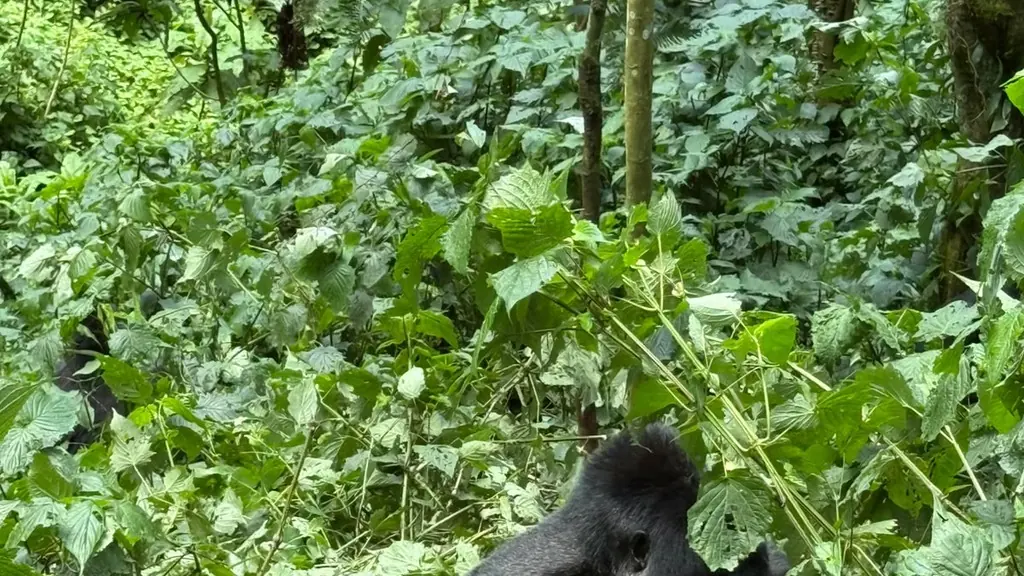
The foreign non-resident gorilla tracking permit is $800 in 2027, or $600 in April, May and November, at both parks, from UWA's Conservation Tariff for January 2027 to June 2028. The permit includes the ranger guide, that day's park entrance and the community contribution. Low-season permits cannot be rescheduled. The official minimum age is 15 (see the age-limit guide). You hike in a group of no more than eight visitors and spend one hour with the family. The walk can be short or long; fitness matters, as we explain in how difficult gorilla trekking is.
Sector choice in Bwindi changes the rest of the trip, not the permit price: Buhoma often connects well towards Queen Elizabeth; Ruhija is quieter and good for birding; Rushaga is where gorilla habituation is offered; Nkuringo is steep, with wide views. See the sectors guide, lodges guide, how to book a gorilla permit, the 2027 permit cost guide and Bwindi versus Mgahinga. Permits are first come, first served, and secured only on full payment, not because a tour operator “holds” a space after an enquiry. Habituation is a different product: about four hours with a family, at $1,800 per person, all year, Rushaga only — longer and harder, not automatically “better”. See the habituation guide. Short gorilla packages are listed in the trip-length section below.
Chimpanzee tracking in Kibale Forest
Kibale is the place we send people who want to track chimpanzees properly. It is a forest day: you follow a habituated community on foot with UWA rangers, usually in the morning, and you may hear the group long before you see it. Sightings are likely, not guaranteed, and the time with the chimps is shorter than the hour you get with gorillas.
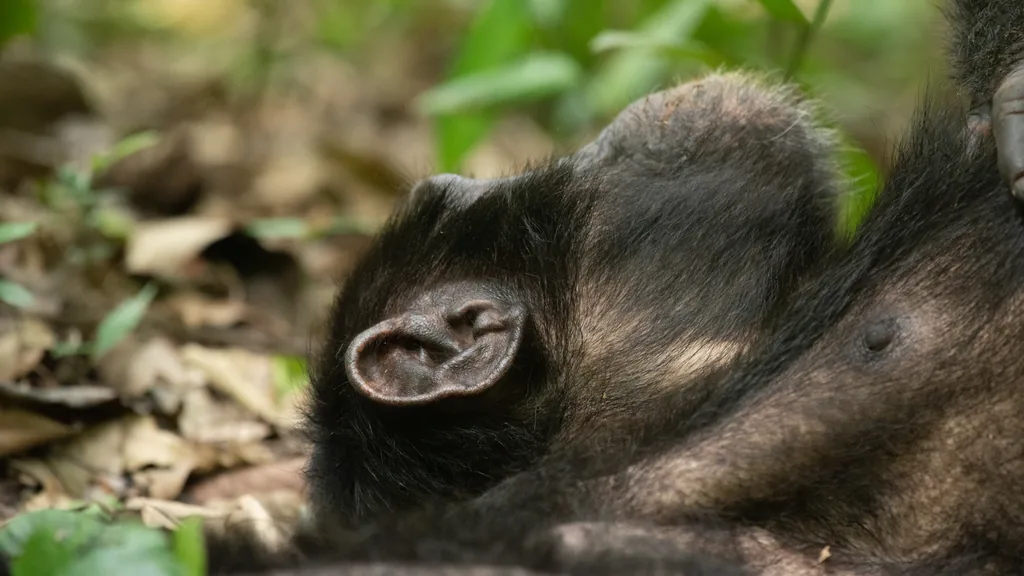
Queen Elizabeth has a smaller chimpanzee population in Kyambura Gorge. It can be a worthwhile add-on if you are already in that park, but it is not a substitute for Kibale if chimpanzees are a priority. We confirm the current Kibale tracking permit, a UWA fee, in your written quote, because the 2027 tariff figure is still being confirmed against UWA. See our chimpanzee trekking hub, the Kibale destination page and the Kibale chimpanzee guide.
Golden monkeys and volcano hikes at Mgahinga
If your gorilla trek is on the Kisoro side, Mgahinga offers two activities we actually run, and that many lists muddle with Bwindi. Golden monkey tracking is only at Mgahinga. The UWA fee for a foreign non-resident is $60, excluding park entrance, which is $40 per adult per 24 hours if it is not already covered that day. Golden monkey habituation is listed at $100, also excluding entrance.
Volcano hikes are the other good reason to give Mgahinga a second day. On the 2027–2028 UWA tariff, volcano climbing is $100 per person per day for a foreign non-resident, and that fee includes park entrance. These are real mountain days, so they only belong on an itinerary that has the time and the fitness for them, usually for travellers already based around Kisoro or the southern sectors of Bwindi.
Queen Elizabeth: Kasenyi, the Kazinga Channel and Ishasha
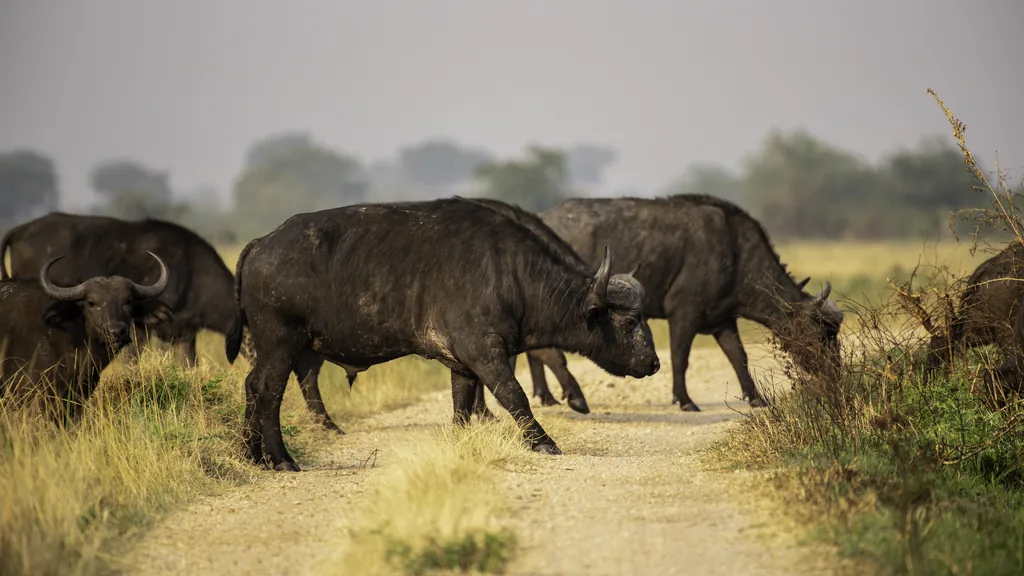
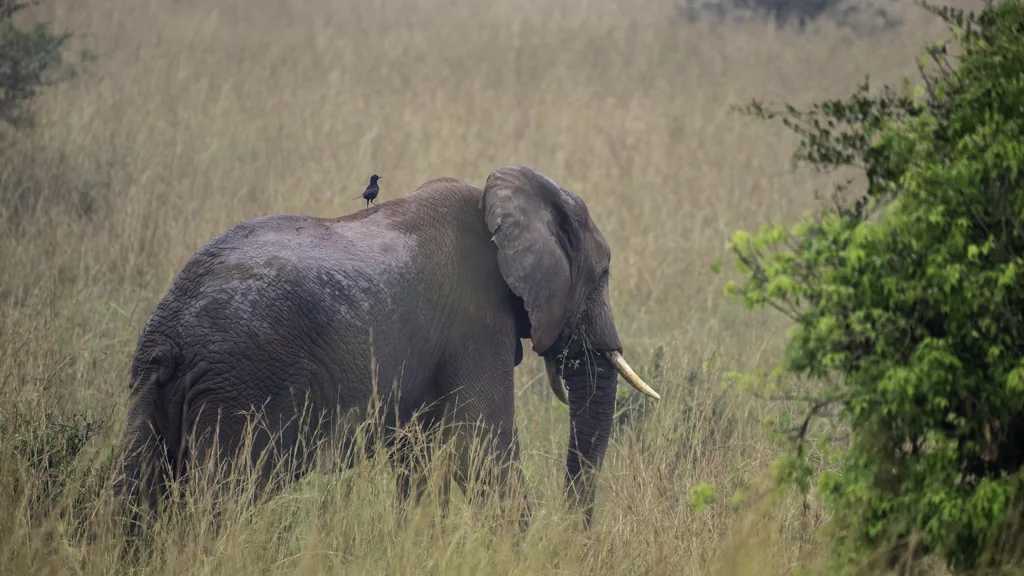
Queen Elizabeth is the savanna park that fits most first-time circuits, because it sits between Kibale and Bwindi. A typical day is a game drive in the Kasenyi plains — elephants, buffalo, Uganda kob and, if you are lucky, lions — then a boat on the Kazinga Channel, where hippos, crocodiles, birds and elephants often outnumber what a single game drive shows.
Ishasha, in the south of the same park, is known for lions resting in fig trees. We can include it when the route makes sense. We never treat those lions as guaranteed. A short Queen Elizabeth trip starts from $956 per person on the 3-day safari to Queen Elizabeth. On a first visit we usually combine this park with primates, as in the 7-day gorillas, chimpanzee and wildlife tour, from $3,869 per person, two sharing.
The Nile launch to the foot of Murchison Falls
Murchison Falls is Uganda's largest national park, and the day that stays with people is often the launch on the Nile. The boat runs to the foot of the falls, where the river is forced through a narrow gap in the Rift. It does not go to the top. The top is a separate visit by road, with a short walk to the viewpoint. A tour that sells a “boat to the top of the falls” is describing the day incorrectly.
The rest of a Murchison stay is game drives on the savanna, often on the northern banks of the Nile. It is a bigger, more open park than Queen Elizabeth, and it sits on a different road from the south-west primate circuit, which is why it rarely belongs on a packed 7-day itinerary and starts to shine at around 10 days. A short trip is the 3-day Nile launch and savannah safari from $1,254. More on the park is on the Murchison Falls destination page.
Walking with rhinos at Ziwa
Uganda's rhinos are at Ziwa Rhino and Wildlife Ranch, on the road between Kampala and Murchison Falls. This is a walk, on foot, with rangers — the honest rhino day on a Uganda wildlife safari, not a sighting from a vehicle roof. It is why we do not describe Queen Elizabeth or a 3-day gorilla trip as a “Big Five” circuit. Where each of the five animals actually is, is set out in our Big Five guide.
Ziwa works when you are already travelling north, and is a poor use of a day if your whole trip is in the south-west. We include it on the 8-day Big-5 Uganda tour from $3,288 per person, and the 8-day luxury Big Five safari from $4,984.
Lake Mburo, for walking and a sensible stop
Lake Mburo National Park is the savanna stop that makes sense on the road between Bwindi or Queen Elizabeth and Entebbe. It is smaller than the two large parks, and one of the better places in Uganda for a guided walk and for zebra; there is also a boat on the lake. It is not a reason, on its own, to plan a first visit, but it is a strong overnight when you would otherwise spend a whole day in the vehicle. We use it on the 4-day Lake Mburo and Queen Elizabeth safari, from $1,615 per person, and on the 5-day gorillas, Lake Mburo and Lake Bunyonyi trip, from $2,769 per person, two sharing.
Birds and quieter days: Mabamba shoebill, Bigodi and Lake Bunyonyi
The shoebill is one of the birds travellers most hope to see in Uganda. The usual short outing is a morning engine boat from the mainland landing at Mabamba wetland, on Lake Victoria near Entebbe, often the day you arrive or the day before you fly out. It is not a canoe. Sightings are possible, never guaranteed. Shoebill is also sometimes seen on a longer boat towards the Nile delta in Murchison Falls. We include Mabamba when it fits, and we say clearly that it is a chance, not a promise. See our travel guide's Mabamba section.

Bigodi wetland, just outside Kibale, is the quieter forest-edge walk we often pair with chimpanzee tracking. Lake Bunyonyi, near Bwindi, is a recovery night after a gorilla day, not a headline wildlife day. In Bwindi itself, birding and day nature walks are a UWA activity at $40 per person for a foreign non-resident, excluding park entrance — worth adding if you have a second morning in the forest, not a stand-in for the gorilla permit.
Things to do in Kampala and Entebbe
Kampala and Entebbe are where most visits to Uganda begin and end. They are not why most people come. If your flight lands at midday and you trek in Bwindi the next morning, you do not have a Kampala day. If you do have a spare afternoon, Entebbe is the gentler base, and the starting point for the Mabamba boat. A short, guided look at Kampala can be worthwhile if you want context before the parks, but it is not one of the best things to do in Uganda for tourists in the same sense as gorilla trekking or the Kazinga boat, and it should not cost you a park morning.
Adventure extras: Jinja, Sipi Falls, the Rwenzori and Kidepo
They are easy to over-stack. Jinja, on the Nile, is the usual base for white-water rafting and a day at the source of the Nile. It sits east of Kampala, on a different road from the south-west parks, so it works as a beginning or an end, not in the middle of a 7-day primate circuit. There is no separate Jinja page on this site yet; if rafting is a priority, tell us when you enquire and we will cost it as an add-on. Sipi Falls, on the slopes of Mount Elgon, and the Rwenzori mountains need their own days. They are not an afternoon detour from a gorilla trek.
Kidepo Valley National Park, in Uganda's far north-east, is dry, open and remote, and a very different feel from Murchison or Queen Elizabeth. Reaching it takes more time on the road, or a flight, so we add it when you have the days, usually as a custom extension rather than a rushed extra on a 7-day gorilla circuit. See the travel guide.
Culture, done properly
The cultural experiences we stand behind are specific, not a filler “village visit”. In Bwindi, the Batwa trail is a UWA-listed forest experience at $40 per person for a foreign non-resident, excluding park entrance, and it needs to be booked in advance. In Mgahinga, the Batwa trail is $80, including entrance. We also arrange community and birding walks in Bwindi when guests want a second forest morning. The 3-day Bwindi, Batwa and Lake Bunyonyi package, from $2,210 per person, two sharing, is built around that combination.

Every Mwanzo booking contributes to the Serah Foundation, which supports vulnerable children in central Uganda. That is not a sightseeing stop. See Serah Foundation and community tourism and our note on a regenerative safari in Uganda.
What to skip, or handle with care
This is the part a packing-list article usually leaves out.
- A Murchison boat “to the top of the falls”. The launch goes to the foot of the falls. The top is by road.
- A Mabamba “canoe”. The shoebill outing we run is an engine boat from the mainland landing.
- Guaranteed Ishasha lions or a guaranteed shoebill. Both are possible. Neither is a promise.
- Adding both Kidepo and a full south-west primate circuit in seven days. The distances do not allow it.
- Night driving between parks on public roads. We plan arrivals in daylight. In-park night game drives, where UWA offers them to guests staying inside the park, are optional, not essential.
- A “Big Five in one park” claim that skips Ziwa. Rhinos are walked at Ziwa, which is why the 8-day Big-5 tour is built the way it is.
- Padding a short trip with Kampala sightseeing at the cost of a park morning, or climbing the Rwenzori “if there is time” on a gorilla week.
How these places to visit in Uganda fit a 3-, 7- or 10-day trip
The point of the list above is not to do all of it. These are live packages, not invented samples: from-prices per person, excluding international flights, confirmed in a written quote.
- 3 days, gorilla focus. Gorilla trek in Bwindi from $2,162, permit included when the quote says so; Bwindi, Batwa and Lake Bunyonyi from $2,210; from Kigali from $1,574; fly-in from $2,330. Skipping gorillas: Queen Elizabeth from $956, Murchison from $1,254, or Kibale and Bigodi from $1,400.
- 4 to 7 days, primates and one savanna park. 4-day gorillas and chimps from $2,879; 5-day wildlife, chimpanzee and gorilla from $3,219; 7-day gorillas, chimps and wildlife from $3,869 — the shape we recommend as the best safari in Uganda for most first-time visitors.
- 8 to 10 days, add the north or slow the same circuit. The 8-day Big-5 tour is from $3,288, or $4,984 in the luxury lodge version. The 10-day Big 5, chimpanzee and gorilla circuit adds Murchison and Ziwa; we will confirm that from-price in a written quote.
- 12 to 14 days. The 12-day wildlife with primates and 14-day gorilla, chimpanzees and wildlife safaris are the slower circuits. The 14-day trip is listed as price on request; ask for a written quote rather than an old-page figure.
Flagships are also grouped on our experiences page. For costs, see the Uganda safari cost 2027 guide. This page is about what to do; that one is about cost.
Practical footnotes
When to visit Uganda. The main experiences run all year. The drier months are generally June to September and December to February. April, May and November are wetter, and that is when the gorilla permit drops to $600; a low-season permit cannot be rescheduled. See best time to visit Uganda, the shorter best time for gorillas guide, and the low-season gorilla safari page.
Visa and health. You need a Uganda e-visa, about $50, applied for on the official portal. A yellow fever certificate is not required, following the official notice of 2 October 2026. See our e-visa and health requirements guide. Travel insurance is not included; you arrange your own.
Permits and payment. Gorilla and chimpanzee permits are first come, first served, and secured only on full payment, not on an enquiry and not because Mwanzo “holds” or “guarantees” a permit in your name before that. You receive a written quote before you pay. Deposit and balance dates are on your quote and on our payment page; see also how we protect your permit money. International flights are not included: Mwanzo does not sell international flight tickets.
Travelling with children? See our family safari guide; the gorilla minimum age is 15. Also: solo female travel in Uganda and is Uganda safe for tourists.
Frequently asked questions
How many days do I need for the best things to do in Uganda?
Seven days is the most useful first visit: gorillas, chimpanzees in Kibale, and a savanna park, usually Queen Elizabeth. Three days is a gorilla add-on, not a full first safari. Ten days or more is when Murchison Falls and Ziwa start to fit.
Can I skip gorilla trekking?
Yes. Uganda is still worth visiting for chimpanzees, the Kazinga Channel, Murchison Falls, Ziwa rhinos and birding. If you skip gorillas, a Queen Elizabeth, Murchison or Kibale short trip is the cleaner plan.
Is the Mabamba shoebill trip a canoe?
No. It is an engine boat from the mainland landing on Lake Victoria, near Entebbe. Sightings are possible, never guaranteed.
Does the Murchison boat go to the top of the falls?
No. The Nile launch goes to the foot of the falls. The top is a separate visit by road.
What are the top tourist attractions in Uganda if I only have a week?
A gorilla trek, a chimpanzee trek in Kibale, and a Queen Elizabeth game drive with the Kazinga boat, plus the driving days between them. That is the 7-day shape we publish, from $3,869 per person, two sharing.
When is the best time to visit Uganda for these experiences?
They run all year. Drier months are generally June to September and December to February. April, May and November are wetter, with a $600 low-season gorilla permit that cannot be rescheduled. See our best time to visit Uganda guide.
Do I need a yellow fever certificate for Uganda?
No. A yellow fever certificate is not required, following the official notice of 2 October 2026. You still need a Uganda e-visa, about $50. Travel insurance is not included in our trips.
How do I turn this list into a trip?
Send us your dates, party size, any ages under 15, whether gorilla trekking is a yes or a no, and whether you prefer to start in Entebbe or Kigali. We reply with a written quote before anything is paid.
Plan the trip with a written quote
The best things to do in Uganda repay the days you give them, planned by a tour operator who is honest about driving times, permits and the difference between a likely sighting and a guarantee. Browse our Uganda safari packages or Uganda tours, or send your dates through the plan your journey form. We reply within one business day. WhatsApp +256 789 487 378 · info@mwanzotoursuganda.com.